

Savannah Distributing Reduces Mispicked Orders Tenfold with Block One Automation's Dense Case Storage System
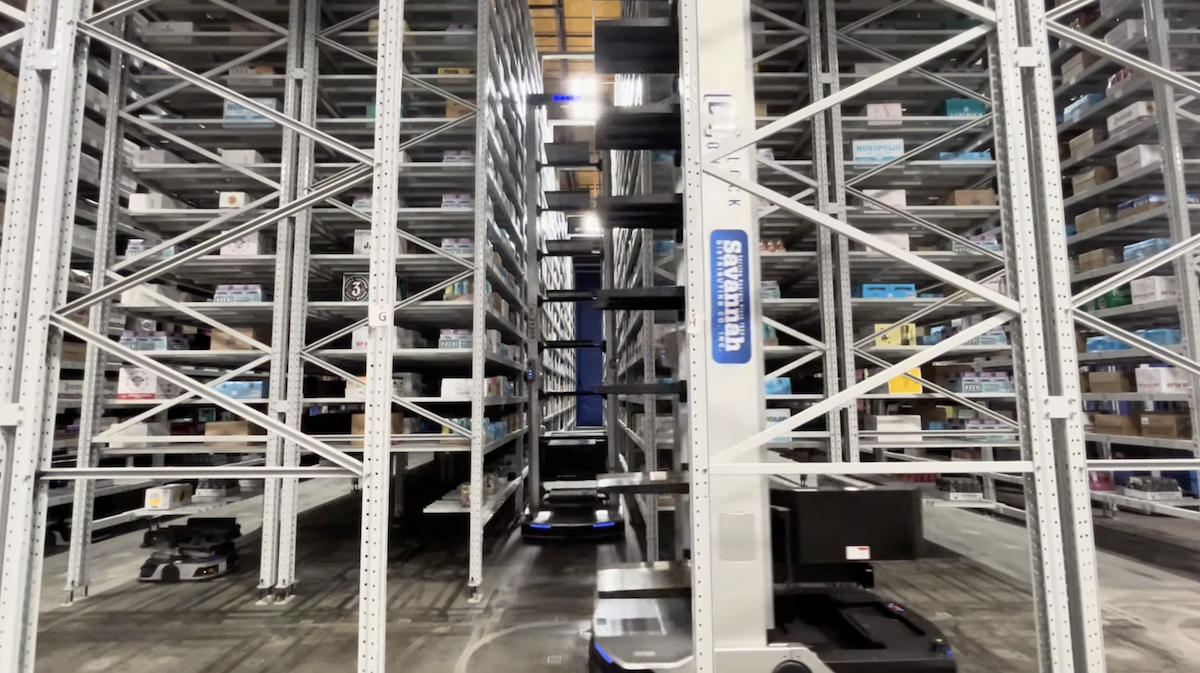
Wine distributor achieves tenfold accuracy gains with Block One Automation's robotic dense case storage (DCS).
FORT COLLINS, CO, UNITED STATES, February 5, 2026 /EINPresswire.com/ -- Savannah Distributing has achieved a tenfold reduction in picking errors after 18 months of operating Block One Automation's Dense Case Storage (DCS™) module in its Georgia facility.
The company manages thousands of SKUs across wine, spirits, and specialty beverage categories where a single SKU mismatch can damage customer relationships.
This is not a pilot or demonstration. The robotic system has been live in production for over 18 months.
Wine and spirits distributors encounter SKU complexity. With thousands of SKUs including subtle variants, accuracy becomes an operational hurdle.
Block One's modular approach allows distributors to address their most pressing challenge first. For wine operations, that means starting with Dense Case Storage—a goods-to-robot system where autonomous case-handling robots travel along tracks within high-density vertical racking to retrieve individual cases on demand.
Savannah Distributing's initial 18-month deployment validates this DCS™-first strategy.
"There's real return on investment from just a P&L standpoint, but then also from accuracy, speed, flexibility," said Cole Gentes, who oversaw the automation deployment at Savannah Distributing.
Savannah Distributing operates with thousands of active SKUs at any given time, many featuring subtle variations that create operational risk in manual picking environments.
"An incremental pickup in speed, but a pretty stark difference in accuracy," Gentes said.
The DCS™ system uses autonomous case-handling robots and vision technology to manage SKU accuracy at the source, eliminating downstream errors tenfold.
"You could mess up 1% of your orders and it doesn't really sound like a lot," Gentes said. "But for that guy on Friday afternoon who gets the wrong bottle, they don't really care what your percentage of mistakes was."
"When there's really unique SKUs with subtle differences, we can feed them directly to the DCS™," Gentes said. "All the potential issues of the warehouse hand getting it wrong, that's all eliminated now."
Beyond accuracy, the DCS™ system delivered measurable gains in warehouse efficiency within Savannah Distributing's existing footprint.
"It's just cleaner, it's more accurate, you don't have to really worry about breakage," Gentes said. "You're taking advantage of all the vertical space. That's where we got a lot of space back and improvement on breakage— it's all the nitty gritty stuff that's not a massive line item, but it all adds up."
The system also provides operational flexibility that manual staging cannot match. Before implementing DCS™, Savannah Distributing staged cases manually for next-day delivery. When customers changed orders after staging, someone had to physically handle those cases again—putting them back, re-staging them, or relocating them.
With DCS™, cases remain in rack storage until they're actually needed. Order changes no longer create manual labor from staging.
"If somebody orders something and then decides they didn't need that or ordered the wrong thing—if that's living in the DCS™, that's fine," Gentes said. "Rewind a year and a half ago, somebody has to deal with that case now because it was staged for delivery."
"Wine distributors need to get a handle on the long tail of SKUs first."
Block One Automation's modular approach recognizes that beer distributors and wine distributors face different operational challenges—and therefore require different automation entry points.
"Beer distributors need to make their high-volume A SKUs efficient first with pallet-to-pallet RoboArm™ picking," said Jonathan O'Neil, Founder of Block One Automation. "Both types of distributors eventually add both DCS™ and RoboArm™ modules—but the order of deployment depends on whether they carry a wine or beer portfolio."
Wine distributors typically deploy DCS™ first to tame SKU complexity. Beer distributors begin with Block One's RoboArm™ to palletize high-volume SKUs, then add DCS™ capacity to manage slower-moving inventory.
Savannah Distributing's decision to deploy automation was influenced by a pre-existing relationship with Block One's leadership team dating back to earlier warehouse technology projects.
"I knew Block One wasn't going to leave us with it not working," Gentes said. "That's always been the fear—you invest all this money and then you're just stuck constantly having to invest more time and effort into getting this stuff to work. I don't think we'd be where we are right now if we didn't have the trust factor between the two companies and the long relationship we've had."
The modular deployment model allowed Savannah Distributing to phase in automation.
"Savannah started where it made sense for their business—with SKU accuracy and flexibility," said TJ Wisthoff, Director of Robotics Sales at Block One Automation. "As space opens up and volume grows, they can add capacity without replacing what's already working. Portfolio determines playbook."
Overall, Gentes sees automation as a necessary shift rather than a temporary trend. "I think it's the future of warehousing," Gentes said. "And if you're not looking at it, it's going to be tough."
The contrast between beer-first and wine-first automation strategies reflects broader operational differences across beverage distribution, but both paths converge at the same destination: a fully autonomous Pallet Factory™ capable of unmanned operation.
Travis Lee
Block One Automation
email us here
Block One Dense Case Storage (DCS) at Savannah Distributing
Legal Disclaimer:
EIN Presswire provides this news content "as is" without warranty of any kind. We do not accept any responsibility or liability for the accuracy, content, images, videos, licenses, completeness, legality, or reliability of the information contained in this article. If you have any complaints or copyright issues related to this article, kindly contact the author above.
