

China Leading Chelating Resin Heavy Metal Removal Supplier: Solving Mining Wastewater Challenges
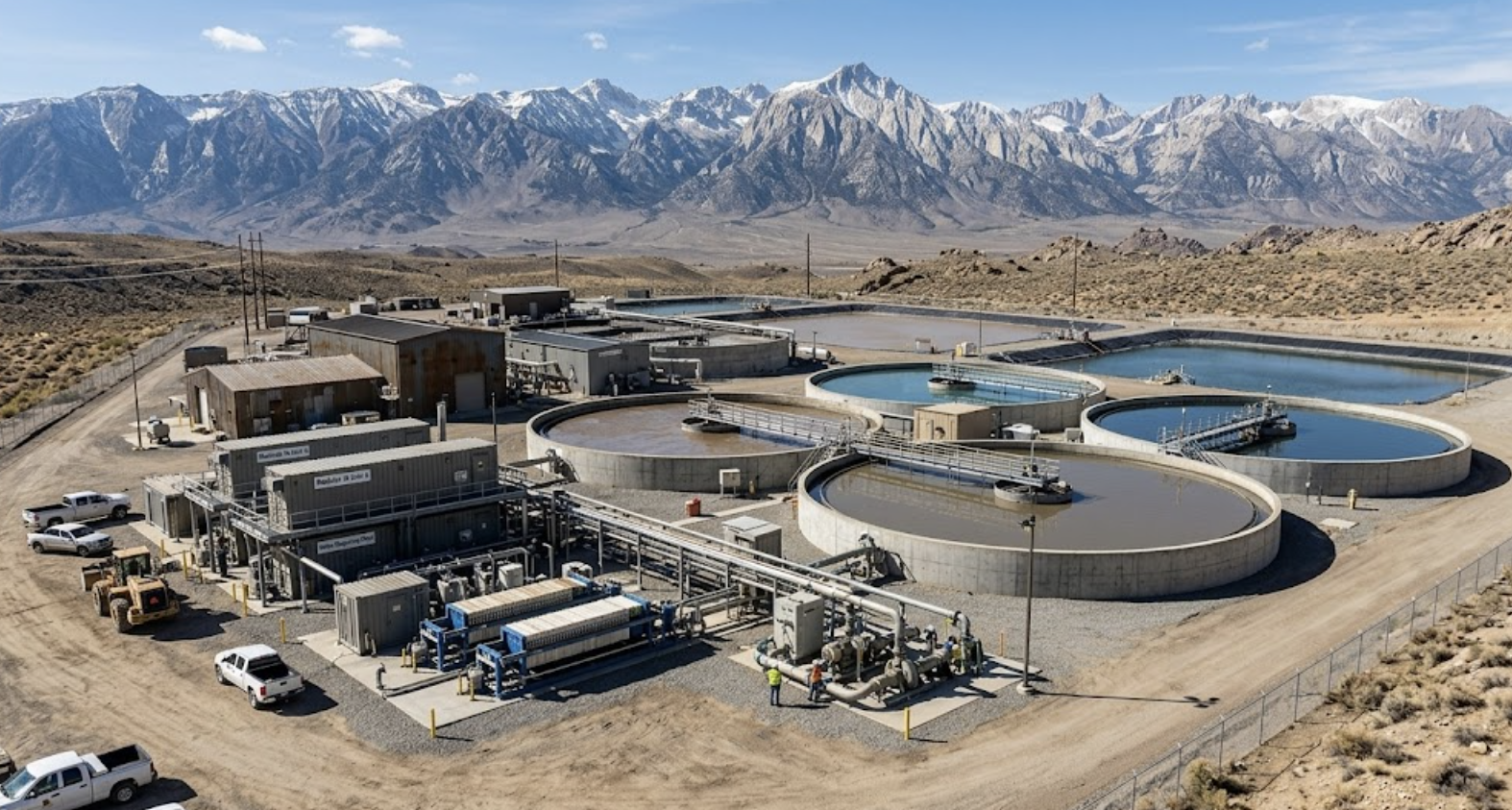

The Mining Wastewater Dilemma: Matrix Interference, High Salinity, and Strict Emission Thresholds
Mining wastewater presents one of the most challenging chemical environments in industrial water treatment. Acid mine drainage typically exhibits low pH levels, high total dissolved solids, and elevated concentrations of background ions like sodium, calcium, magnesium, and iron. These non-target cations create intense competition for traditional ion exchange media. When operators attempt to remove trace toxic metals using standard resins, the non-target ions quickly saturate active exchange sites. Consequently, standard media suffer from rapid breakthrough and frequent regeneration requirements.
Traditional chemical precipitation methods, such as lime neutralization, also create significant operational bottlenecks. Although precipitation reduces bulk heavy metal loads, the process generates immense volumes of toxic chemical sludge. Transporting and landfilling this hazardous waste imposes heavy recurring costs on mining operations. Furthermore, lime precipitation cannot achieve sub-parts-per-million emission thresholds for persistent contaminants like copper, nickel, cadmium, or mercury. As environmental agencies enforce strict micro-pollutant discharge limits, mining plants require advanced polishing technologies that operate reliably in high-salinity matrices.
Transitioning from simple neutralization to selective metal recovery offers both environmental compliance and economic value. Modern mineral processing plants view wastewater not merely as an environmental liability, but as a secondary resource stream. Recovering dissolved copper, nickel, and cobalt from hydrometallurgical rinse waters allows facilities to offset wastewater treatment expenditures. Achieving this goal requires specialized separation media that bind target heavy metal cations exclusively while ignoring abundant background salts.
Molecular-Level Selectivity: The Mechanism Behind Sunresin SEPLITE Chelating Resins
Chelating resins achieve superior selectivity through custom-engineered functional groups anchored to a rigid polymeric matrix. Unlike standard cation exchange media that bind ions primarily through weak electrostatic attraction, chelating polymers form stable coordination complexes with specific metal cations. Active functional groups, such as iminodiacetic acid, aminophosphonic acid, and bispicolylamine, act as organic ligands. These ligands donate lone electron pairs to form covalent-like coordinate bonds with transition metal ions.
This molecular coordination mechanism explains why chelating media excel in hostile chemical environments. The thermodynamic stability of metal-ligand complexes varies significantly depending on the target metal's ionic structure. For example, bispicolylamine functional groups exhibit exceptionally high affinity for copper and nickel, even in solutions with extremely low pH values. Similarly, thiol and thiourea functional groups form virtually irreversible coordinate bonds with heavy metals like mercury. Because the binding energy for target transition metals far exceeds that for calcium or magnesium, the resin retains its selectivity even when background salt concentrations are thousands of times higher.
Physical durability plays an equally vital role in industrial mining applications. Resin beads must withstand continuous hydraulic pressure, osmotic shock during acid regeneration, and mechanical abrasion from slurry particles. Advanced macroporous bead synthesis ensures high osmotic stability and crush strength. As a result, the media maintains uniform hydrodynamic flow, low pressure drops, and consistent exchange kinetics over hundreds of operational cycles, extending overall media service life.
Engineering Validation: Translating Cross-Industry Expertise to Mining Effluents
Deploying chelating resins effectively in mining applications draws heavily on technical lessons learned from other demanding chemical sectors. For instance, the chlor-alkali industry requires deep brine purification to protect sensitive ion-exchange membranes from trace metal contamination. Facilities utilizing targeted ion exchange technology for deep mercury removal in the chlor-alkali industry consistently reduce heavy metal concentrations from parts-per-million levels down to single-digit parts-per-billion thresholds. This proven cross-industry capability demonstrates the real-world reliability of chelating media under severe chemical stress.
In mining and hydrometallurgical flowsheets, chelating resins perform critical roles in both effluent polishing and primary metal recovery. Placed after primary precipitation steps, chelating media act as secondary guard beds that strip residual toxic metals down to non-detectable levels. This secondary polishing step guarantees full compliance with local discharge regulations, protecting plants from environmental penalties and operational shutdowns.
Furthermore, chelating resin beds concentrate trapped target metals into compact, high-purity eluate streams during chemical regeneration. When operators regenerate saturated resin beds with dilute mineral acids, the resulting liquid contains concentrated copper, nickel, or zinc. Facilities direct this concentrated stream back into main electrowinning or precipitation circuits. Consequently, the treatment process converts an environmental compliance challenge into a closed-loop resource recovery operation.
End-to-End Capability: Sunresin’s Integrated EPC and Technology Partnership
Successfully implementing chelating resin systems requires seamless coordination between polymer chemistry, column engineering, and system automation. Global separation technology provider Sunresin (Sunresin New Materials Co. Ltd.) addresses these industrial demands by offering complete technical solutions tailored to complex mining wastewater. By manufacturing proprietary SEPLITE® chelating resins under strict quality management systems, the producer guarantees batch-to-batch consistency and high performance.
Industrial implementation begins with detailed feed stream analysis and empirical validation. Sunresin conducts extensive laboratory feasibility testing and field-scale pilot trials to establish exact breakthrough curves, flow velocities, and regeneration protocols. This empirical approach eliminates operational risks, allowing mining engineers to design full-scale treatment facilities with accurate capital and operational cost projections. Over the years, Sunresin has successfully deployed custom separation systems across global mining and metallurgical facilities.
In addition to media manufacturing, Sunresin New Materials Co. Ltd. delivers comprehensive Engineering, Procurement, and Construction (EPC) services for automated wastewater treatment skids. Integrating proprietary SEPLITE® chelating media with custom-engineered vessels, automated valve manifolds, and real-time monitoring instruments ensures reliable long-term performance. Through global technical support and ongoing process optimization, Sunresin helps mining enterprises overcome complex wastewater challenges, achieve environmental compliance, and maximize sustainable material recovery.
For more information regarding chelating resin technologies and mining wastewater solutions, visit https://www.seplite.com/.
Sunresin New Materials Co. Ltd.
Sunresin New Materials Co. Ltd.
+ +86 29 8669 1600
email us here
Legal Disclaimer:
EIN Presswire provides this news content "as is" without warranty of any kind. We do not accept any responsibility or liability for the accuracy, content, images, videos, licenses, completeness, legality, or reliability of the information contained in this article. If you have any complaints or copyright issues related to this article, kindly contact the author above.
